
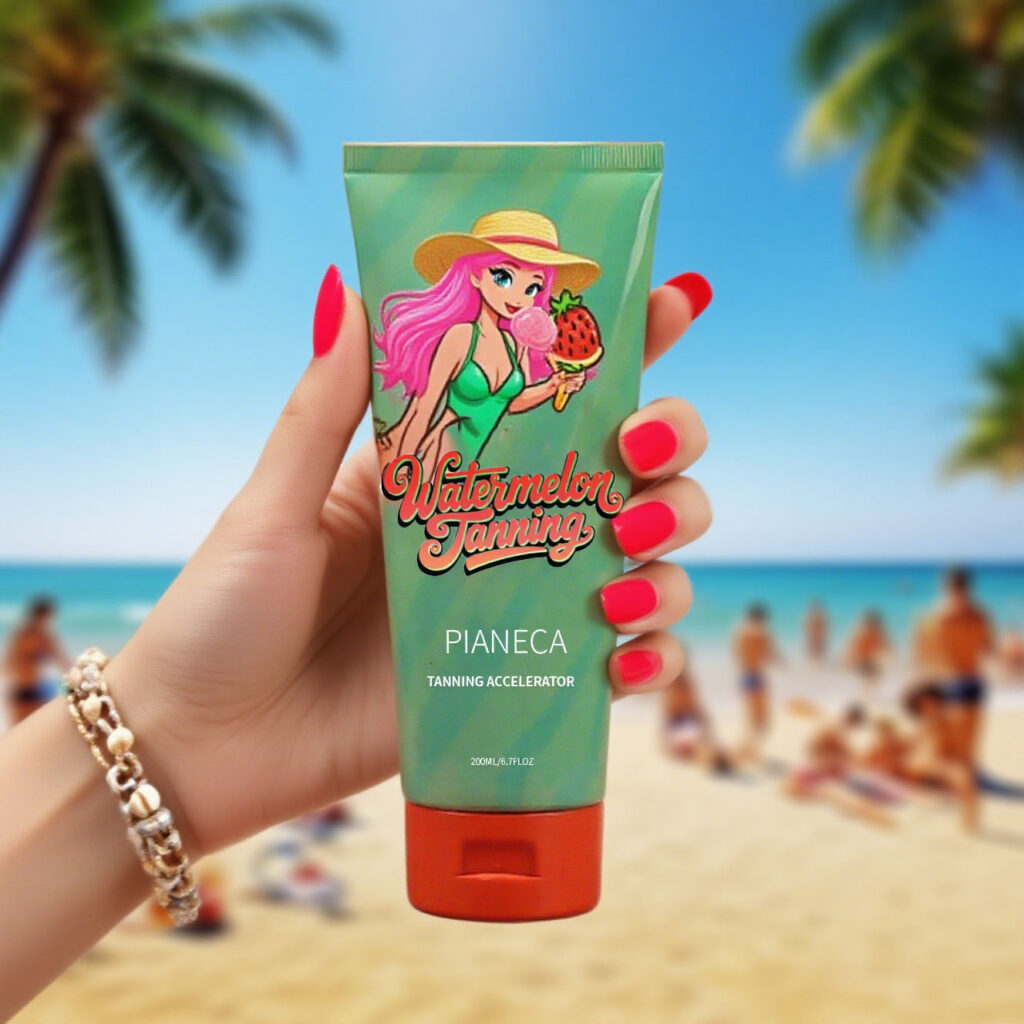
Confused about the difference between self tanners and tan accelerators? Learn how they work, who they’re for, and which product is best for your skincare brand.
The Growing Demand for Tanning Products
The global tanning market continues to grow as consumers look for products that help them achieve a healthy, sun-kissed glow. However, many people still confuse self tanners with tan accelerators.
Although both products are associated with tanning, they work in completely different ways. Understanding these differences is essential for brands planning to launch their own private label tanning line.
What Is a Self Tanner?
A self tanner creates the appearance of tanned skin without requiring sun exposure.
Most self tanners contain DHA (Dihydroxyacetone), an ingredient that reacts with amino acids in the outer layer of the skin to produce a temporary bronzed color. The effect usually develops within several hours and lasts about 5–7 days before fading naturally as the skin exfoliates.
Common Self Tanner Formats
- Self Tanning Lotion
- Self Tanning Mousse
- Self Tanning Spray
- Self Tanning Serum
- Self Tanning Drops
- Self Tanning Stick
Best For
- Consumers who want an instant bronzed appearance
- Regions with limited sunshine
- People who prefer UV-free tanning
What Is a Tan Accelerator?
Unlike self tanners, tan accelerators do not contain DHA and do not artificially color the skin.
Instead, they are designed to support the skin’s natural tanning process during sun exposure or indoor tanning. Many formulas focus on moisturizing the skin while incorporating ingredients that help promote an even, natural-looking tan.
Common Tan Accelerator Formats
- Tanning Lotion
- Tanning Butter
- Tanning Oil
- Tanning Gel
- Indoor Tanning Lotion
Best For
- Beach vacations
- Outdoor tanning
- Sunbed users
- Consumers seeking a natural-looking tan
Key Differences
| Self Tanner | Tan Accelerator |
|---|---|
| Contains DHA | Usually DHA-free |
| Creates color without UV exposure | Supports the skin’s natural tanning process during UV exposure |
| Results appear within hours | Results develop gradually with tanning |
| Temporary cosmetic color | Natural tan develops through sun exposure |
| Suitable for year-round use | Best used during outdoor tanning or sunbed sessions |
Which Product Should Your Brand Choose?
The right choice depends on your target market.
A self tanner is often a better fit if your customers:
- Prefer UV-free beauty routines
- Want fast results
- Live in regions with less sunshine
A tan accelerator may be a better option if your customers:
- Spend time at the beach
- Use tanning beds
- Prefer developing a natural tan
- Enjoy outdoor lifestyles
Many successful brands include both product categories to meet different customer needs.
Private Label Opportunities
Consumer demand for tanning products continues to expand across North America, Europe, and Australia. Brands are also introducing a wider variety of textures and formats to stand out in the market.
Popular private label options include:
- Tanning Butter
- Tanning Oil
- Tanning Lotion
- Tanning Gel
- Tanning Mousse
- Self Tanning Serum
- After Sun Lotion
Offering multiple formats allows brands to build a complete tanning collection and increase customer loyalty.
Looking for a reliable OEM tanning products manufacturer?
 Custom Formula
Private Label
Low MOQ
